Nov.
14, 2026
Contents
When Machined Stainless Parts Actually Need Passivation
303, 304, 316, or 316L: The Alloy Sets the Ceiling
Why Cleaning and Process Sequence Control the Outcome
How to Choose Between Citric and Nitric Passivation
Passivation Limits: Tolerances, Roughness, and Weld Oxides
Matching Treatment to Automation, Medical, and Fluid-Service Parts
What Passivation Inspection Can—and Cannot—Prove
How to Specify Passivation Without Adding Unnecessary Cost
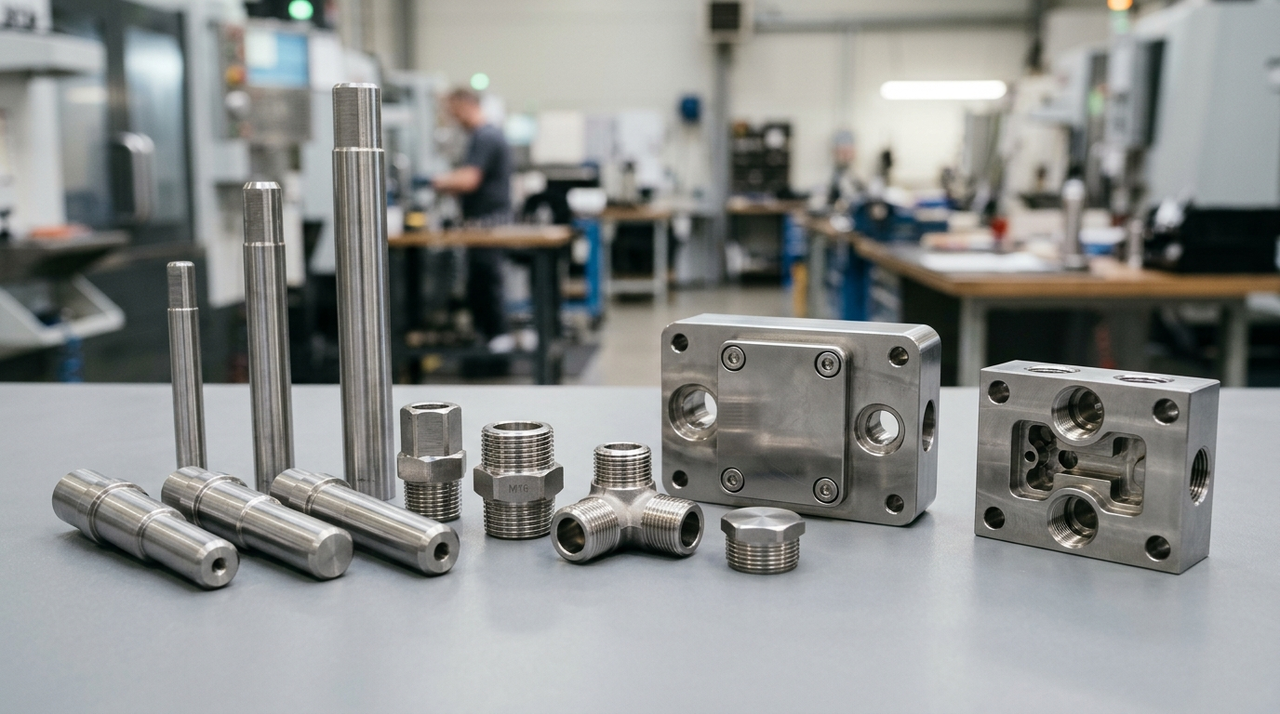
Deciding whether to passivate a stainless steel CNC part starts with its operating environment, alloy, and manufacturing history—not simply its appearance. A freshly machined component can look clean while carrying free iron or residues that lead to early staining and corrosion. For engineers and buyers sourcing precision parts, the challenge is specifying a treatment that addresses those risks without expecting it to correct an unsuitable alloy or poor surface finish. This guide compares 303, 304, 316, and 316L, explains where stainless steel passivation helps and where it stops, and outlines the process, inspection, and drawing requirements for moving from prototypes to repeat production with a machining supplier such as Huaruida Precision Machinery. Use it to write RFQ language that controls cost while protecting the performance your application actually requires.
Specify stainless steel passivation when surface contamination could undermine the required corrosion performance. Typical triggers include contact with shared tooling, steel fixtures, grinding debris, or handling equipment that also processes carbon steel. Moisture, cleaning fluids, and outdoor exposure make these risks more consequential. A dry, enclosed automation bracket may justify a different treatment and verification plan than a repeatedly washed sensor housing, even when both use 304.
Stainless steel resists corrosion through a thin, chromium-rich passive film. Machining exposes fresh metal, which can repassivate naturally under suitable conditions, but surface contamination can interfere with that protection. Chemical passivation removes free iron and supports formation of a clean passive layer. It is not plating, does not add a substantial protective coating, and must not be treated as a substitute for corrosion-resistant alloy selection.
Base the decision on the complete service condition: chloride exposure, temperature, time spent wet, cleaning chemistry, and crevices. Also confirm whether passivation is required by a customer drawing or governing specification rather than assumed. For context on how material choice and finishing fit into production, this overview of CNC machining processes and applications provides a useful starting point before you set part-specific requirements.
Passivation improves surface condition; it does not change the alloy's bulk chemistry. Grade 303 contains sulfur-bearing inclusions that improve machinability but generally reduce corrosion resistance compared with 304. Those inclusions also make process selection more sensitive, because an unsuitable treatment can attack the surface or leave defects. A procedure that works well on 304 should not be transferred to 303 without review.
Grade 304 is a common choice for general-purpose components exposed to mild environments. The molybdenum in 316 and 316L improves resistance to chloride-related pitting compared with 304, although neither grade is immune to seawater, concentrated chlorides, or stagnant crevices. The low carbon content of 316L primarily reduces susceptibility to sensitization associated with welding or certain thermal exposure; it does not make passivation unnecessary.
Use the comparison below to separate material selection from finishing selection. For a nonwelded, machined component, 316L should not be assumed to deliver a major corrosion advantage over 316 solely because of the L designation. Conversely, choosing inexpensive machining in 303 can become a false economy if the application demands frequent washdown or exposure to aggressive fluids.
Grade | Useful characteristic | Passivation consideration | Application fit |
|---|---|---|---|
303 | Free-machining behavior | Sulfur inclusions require a compatible, controlled process | Dry-service fittings, threaded parts, and instrument components |
304 | General-purpose corrosion resistance | Remove machining contamination; do not expect chloride immunity | Equipment brackets, housings, and general machinery parts |
316 | Better chloride pitting resistance than 304 | Passivation supports, but cannot exceed, alloy capability | Washdown equipment and selected fluid-handling components |
316L | Low carbon content for welded or thermally affected designs | Weld oxides and heat tint may need separate removal | Welded assemblies and selected medical or process components |
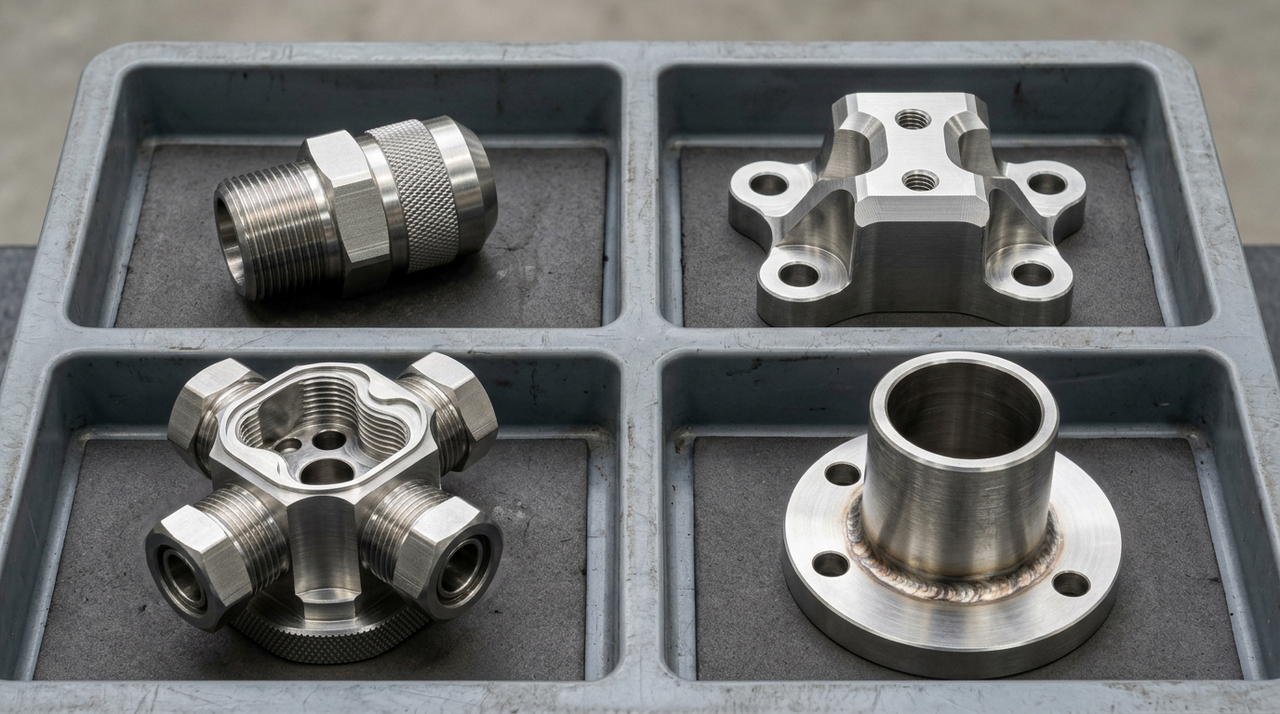
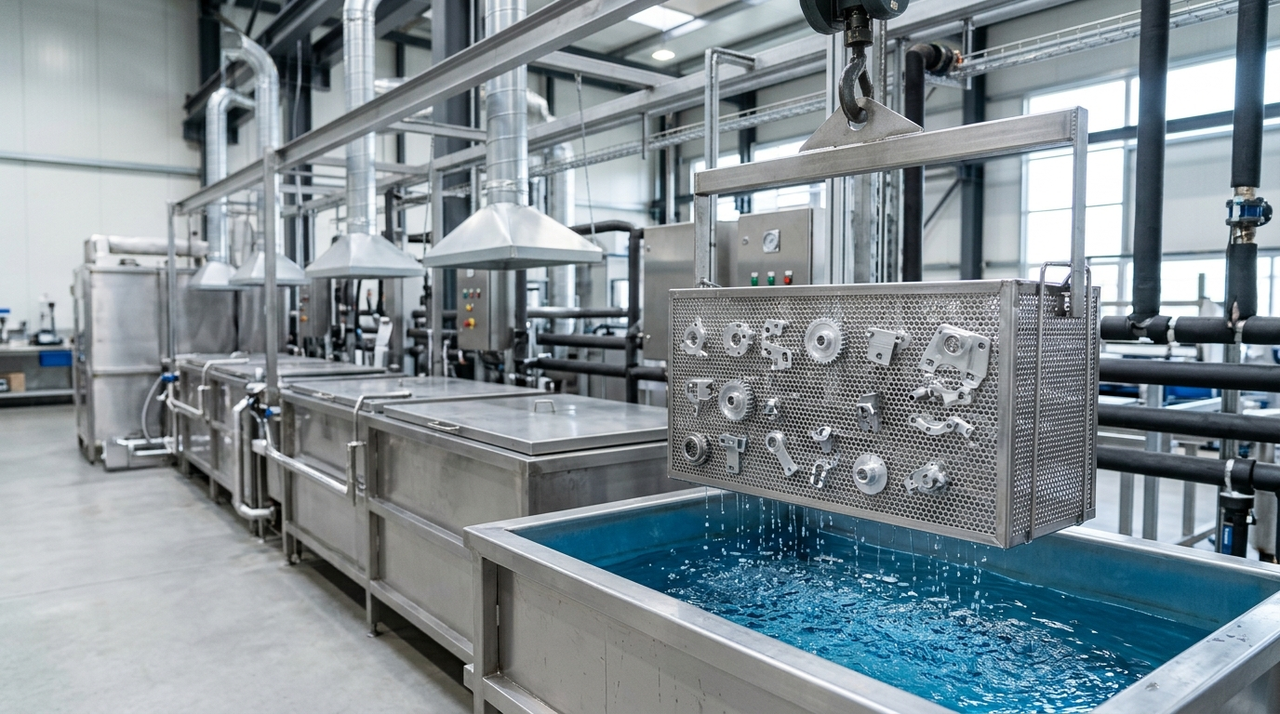
Effective passivation begins before the acid treatment. Machining oils, coolant residues, polishing compounds, and debris must be removed so the solution can contact the metal uniformly. Blind holes, intersecting passages, and fine threads deserve particular attention because they trap both soils and liquids. If contamination remains, treatment can produce inconsistent results even when the bath itself is correctly controlled.
Plan the sequence around the last operation that could contaminate or damage the surface. Deburring and abrasive finishing normally precede final cleaning and passivation. Welding, grinding, or additional machining afterward can create new areas requiring treatment. Heat tint and substantial oxide scale usually require an appropriate oxide-removal process; ordinary passivation is not a reliable way to remove them. For 303, the processor may need grade-specific cleaning and post-treatment steps.
Rinsing and drying are part of the corrosion-control process, not housekeeping afterthoughts. Retained chemistry or poor rinse quality can cause stains and renewed contamination. Design parts for drainage where possible, and ask how internal features will be flushed and dried. After treatment, use clean handling and packaging that prevent renewed iron pickup. An excellent chemical cycle provides little value if finished parts return to a dirty steel workbench.
Citric acid and nitric acid treatments are both established approaches to stainless steel passivation. Citric processes use chelation to remove iron, while nitric processes use an oxidizing acid environment. Either can be appropriate when the selected procedure is compatible with the alloy and satisfies the specified acceptance requirements. Neither chemistry is universally superior across every grade, surface condition, and geometry.
Do not choose solely from the bath name or ask a supplier to use an arbitrary immersion time. Concentration, temperature, exposure, cleanliness, rinse control, and bath maintenance all affect results. This is especially important for 303, where excessive or unsuitable treatment may attack inclusions and harm the finish. For a new alloy source, surface finish, or complex geometry, trial processing and inspection of representative parts can reduce production risk.
ASTM A967/A967M covers chemical passivation treatments and associated verification options for stainless steel parts, while ASTM A380/A380M provides broader guidance on cleaning, descaling, and passivation. Identify the applicable edition and any customer-specific requirements rather than assuming a general reference defines the entire process. If the drawing permits several treatment options, allow the processor to recommend a qualified route while retaining clear requirements for surface condition and verification.
Correctly controlled chemical passivation is intended to cause negligible dimensional change, making it suitable for many precision CNC components. However, 'negligible' is not permission to ignore sensitive features. Thin edges, miniature threads, sealing surfaces, and very tight fits deserve review, particularly in 303 or when the treatment route includes separate pickling or oxide removal. Ask which operations are included under the supplier's quoted finishing description.
Passivation does not intentionally level machining marks, remove burrs, or deliver a lower specified roughness. Electropolishing is different: it removes metal electrochemically and can smooth the surface while improving cleanliness and corrosion behavior. It also requires consideration of stock removal, edge rounding, and dimensional effects. If the functional requirement is easier cleaning or reduced surface roughness, specify that requirement directly instead of expecting passivation to achieve it.
Nor does passivation repair deep scratches, existing pits, weld defects, or an alloy made unsuitable by service conditions. Weld heat tint may conceal a chromium-depleted surface region that needs suitable removal before final treatment. Establish the required condition of sealing faces and visible surfaces before processing, then verify it afterward. Where fit is critical, state clearly whether dimensions and roughness are acceptance requirements after all finishing operations are complete.
In robotics and industrial automation, passivation can help reduce rust staining on shafts, spacers, fasteners, and housings exposed to humidity or routine cleaning. It will not improve wear resistance, correct galling, or protect an unsuitable sliding contact. For dry electronics equipment, corrosion treatment may be less important than particulate cleanliness, connector-interface requirements, and controlled handling. Select the finish around the actual failure mode rather than applying one blanket specification.
Fluid-handling and washdown components often justify closer attention to alloy, drainage, and surface texture. Passivated 316 or 316L may be a stronger starting point than 303, but trapped liquid beneath a seal or in an unflushed thread can still promote localized corrosion. Dead-end passages also complicate rinsing after treatment. Resolve these geometry issues during design review rather than asking a finishing process to compensate later.
For medical and aerospace components, passivation is one element of a larger material and process-control system. It does not establish biocompatibility, sterility, implant suitability, or regulatory approval. ASTM F86 may be relevant to metallic surgical implants when invoked by the applicable requirements, but it should not be assigned indiscriminately to every medical part. A broader review of CNC machining applications across industries can help frame application needs before finalizing the drawing.
A visually bright surface does not prove successful passivation. Visual inspection can identify staining, etching, residues, and handling damage, but free-iron contamination may be invisible. Applicable specifications provide verification methods such as water immersion, humidity exposure, or chemical tests. These are not interchangeable universal checks: method selection depends on the alloy, governing requirements, and intended acceptance criteria.
Chemical tests must be suitable for the grade, particularly free-machining stainless steels such as 303. Agree on the test method and interpretation before ordering rather than selecting a convenient test after production. Define the lot, sampling plan, test frequency, and whether testing will use actual components or representative coupons. Coupons may support process verification, but simple coupons do not necessarily reproduce the cleaning and drainage challenges of internal passages.
Passing a passivation verification test does not predict service life in a specific chloride environment or prove that every corrosion mechanism is controlled. Where failure consequences are significant, application-representative corrosion or cleaning-cycle testing may also be appropriate. Procurement records should connect material identity, processing batch, and acceptance results. A treatment certificate alone is not equivalent to a detailed test report, so request the evidence your quality plan actually needs.
A useful RFQ includes the exact stainless grade, drawing revision, final dimensional tolerances, surface roughness, service environment, and applicable passivation specification. Identify welds, heat tint, blind passages, cosmetic faces, and any surfaces or installed materials that cannot tolerate the selected process. When an assembly includes dissimilar metals, adhesives, or seals, discuss treating the stainless components before assembly rather than assuming the completed unit can be immersed.
Define documentation and acceptance requirements separately from the treatment name. Specify required material traceability, test reporting, sampling, and packaging. If a customer mandates a particular process or approved processor, disclose that before quotation. Otherwise, unnecessarily restricting the chemistry or demanding redundant tests can increase cost and lead time without improving performance. Conversely, a vague note reading only 'passivate' leaves important decisions unresolved.
When sourcing from Huaruida Precision Machinery, use the drawing and RFQ to coordinate machining, deburring, finishing, and final inspection as one manufacturing route. For international orders, agree on specification editions and reporting requirements before production. A representative first article is particularly useful for 303, small internal features, or appearance-sensitive parts. Once the route is accepted, require review of relevant process changes so repeat orders retain the intended quality controls.
It may. The low carbon content of 316L does not prevent free-iron contamination during machining and handling. Specify passivation according to the service environment, manufacturing route, and customer requirements.
Yes, with a process suitable for its sulfur-bearing inclusions. Cleaning, chemistry, exposure, and verification need careful selection. Passivation does not give 303 the underlying corrosion resistance of 304 or 316.
Proper chemical passivation is intended to cause negligible dimensional change. Separate pickling, oxide removal, or electropolishing can remove more material, so confirm the complete treatment route and inspect critical features after finishing.
Neither is universally better. Both can meet appropriate requirements when correctly controlled. Choose according to alloy compatibility, part geometry, applicable specifications, and demonstrated acceptance results.
No treatment guarantees that result. Passivation helps remove surface contamination, but chloride pitting and crevice corrosion remain possible. Alloy selection, temperature, drainage, and exposure conditions determine whether a material is suitable.
It often makes sense to passivate individual stainless components before installing seals, adhesives, or dissimilar metals. However, later welding or machining may require additional treatment. Plan the sequence around both contamination risks and chemical compatibility.
Latest News
Products

45# Steel

45# Steel

45# Steel

Aluminum Tube

Aluminum Alloy

45# Steel

Aluminum Alloy

304 Stainless Steel
Navigation
Navigation
Contact Us
Tel: +86 13417419143
E-mail: [email protected]
Add:
2nd Floor, Building 7, 156 High Tech Industrial Park, Fuyuan 1st Road, Zhancheng Community, Fuhai Street, Baoan District, Shenzhen City, China.
