Nov.
14, 2026
Contents
What Will Contact the Part During Its Service Life?
A Practical Comparison of the Four Grades
Why 303 Can Reduce Machining Cost on Turned Parts
When Welding Makes 316L the Better Choice
Tight Tolerances Need More Than a Grade Callout
How Surface Condition Changes Corrosion Performance
Compare Finished-Part Cost, Not Just Material Price
What to Include in a Stainless Steel CNC RFQ
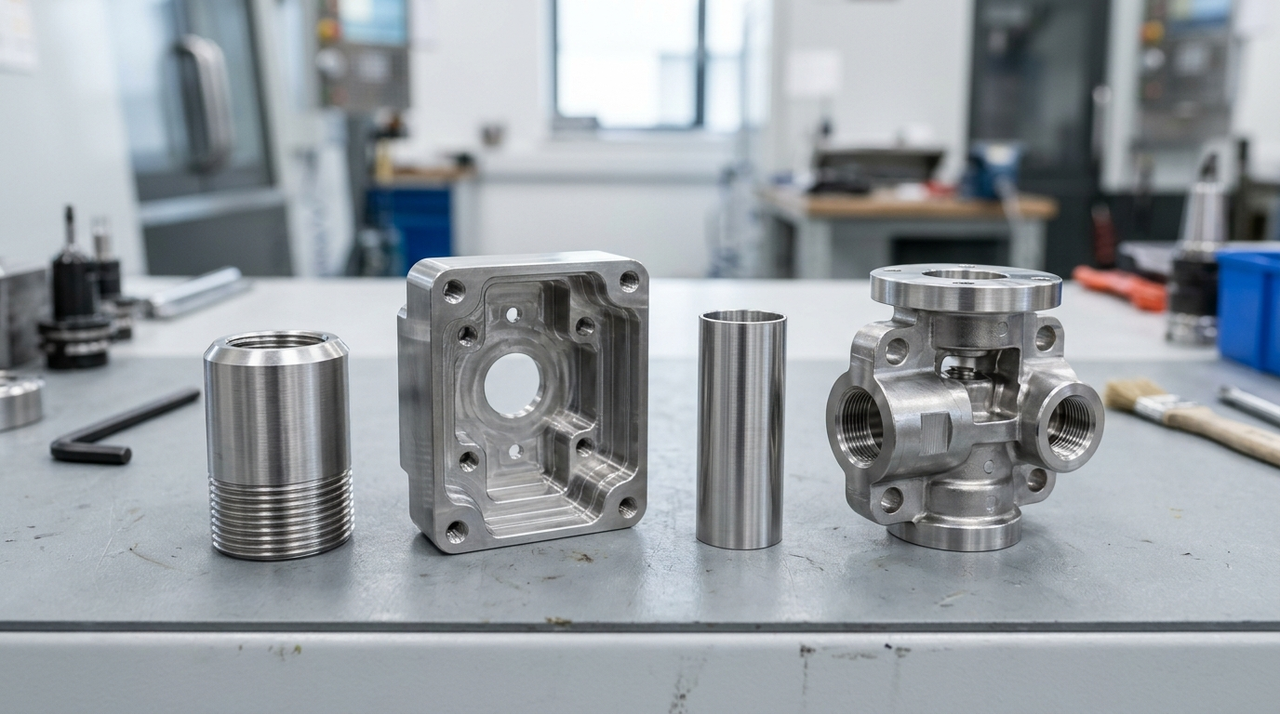
Choose stainless steel for the conditions your CNC part will face—not simply the grade listed on a previous drawing. A dry automation spacer, a welded instrument housing, and a chloride-exposed valve component can look similar in CAD yet require different materials. The wrong choice can lengthen machining time, complicate welding, or cause corrosion after an otherwise successful inspection. For engineers and buyers sourcing precision parts from Huaruida Precision Machinery, this guide compares 304, 303, 316, and 316L through the decisions that actually affect production: service environment, machinability, joining, dimensional control, finishing, and purchasing specifications. The outcome you want is a defensible material choice that balances functional requirements with total manufacturing cost, and that survives both the inspection report and the field.
For stainless steel CNC machining, start with the exposure profile: water chemistry, cleaning agents, operating temperature, wet/dry cycles, and whether liquid can remain trapped in joints. Stainless steel depends on a thin passive surface film for corrosion resistance. Chlorides, surface deposits, and oxygen-depleted crevices can undermine that protection locally. A material that performs well in a clean indoor assembly may fail around a gasket, under a clamp, or beneath dried salt deposits where oxygen cannot reach the surface.
304 is often a sensible baseline for indoor equipment and many mild aqueous environments. 316 and 316L contain molybdenum, which improves resistance to chloride-induced pitting and crevice corrosion relative to 304. That does not make either grade immune to seawater, hot brines, or aggressive cleaning solutions. Immersion, stagnant fluid, and elevated temperature can justify a higher-alloy material outside these four options, supported by corrosion data or representative testing rather than optimism.
303 requires additional caution because the sulfur-bearing inclusions that improve cutting also reduce corrosion resistance, particularly in demanding exposures. It can suit dry, non-welded automation hardware, but it should not automatically replace 304 in wet service. Record concentrations and temperatures rather than describing the environment only as 'outdoor,' 'medical,' or 'marine.' Those labels do not provide enough information for a reliable alloy decision, and they often hide the one variable—chloride level—that drives pitting.
These grades are all austenitic stainless steels, but they solve different manufacturing problems. 304 is a general-purpose starting point; 303 prioritizes machinability; 316 adds corrosion resistance through molybdenum; and 316L combines that alloy family with a lower carbon limit. Use the comparison below to establish a shortlist, then check the governing material specification and actual service conditions before releasing a drawing.
The 'L' designation is primarily about controlling sensitization associated with welding or other relevant thermal exposure. In common specifications, 316L has a maximum carbon content of 0.03%, compared with 0.08% for 316; verify the applicable standard and product form. Lower carbon does not automatically improve every type of corrosion resistance. In unwelded service, 316 and 316L generally have similar resistance to chloride pitting when other factors are comparable.
Do not treat these grade names as a strength ranking. Mechanical properties depend on the specification, stock condition, product form, and cold work. Annealed 316L may have a lower specified minimum strength than 316 under some standards. Where load capacity is critical, compare the required properties with the material certificate rather than assuming the more corrosion-resistant option is also the stronger one.
Grade | Main advantage | Typical CNC fit | Key caution |
|---|---|---|---|
304 | Balanced corrosion resistance and versatility | General housings, brackets, and equipment components | Limited resistance in aggressive chloride exposure |
303 | Best machinability of these four grades | Dry-service turned spacers, fittings, and threaded hardware | Reduced corrosion resistance; generally unsuitable for welding |
316 | Improved chloride resistance over 304 via molybdenum | Fluid-handling components where exposure data supports use | Not immune to pitting, crevice corrosion, or stress corrosion cracking |
316L | Reduced sensitization risk during welding | Welded housings and corrosion-sensitive assemblies | Low carbon does not eliminate weld cleaning or service verification |
303 is deliberately modified for free machining, typically through increased sulfur content. The resulting inclusions help chip breaking and can reduce cutting resistance compared with 304 or 316. This is valuable in CNC turning, repeated threading, and production involving many small features. On a dry-service threaded spacer, for example, shorter cycles and easier chip management may matter more than the additional corrosion resistance offered by 316.
304, 316, and 316L tend to produce tougher, stringy chips and retain heat near the cutting zone. They also work-harden, so rubbing, dwell, or repeatedly cutting an already hardened surface can accelerate tool wear and chip sharpness quickly. Effective machining relies on rigid workholding, suitable cutting tools, controlled engagement, and adequate coolant delivery. Deep holes and narrow pockets increase the challenge because chips and heat have fewer escape paths.
There is no universal machining-cost percentage separating the grades. Bar condition, tool access, geometry, surface-finish requirements, and production volume all influence the result. Ask for a grade-alternative quotation only after confirming both materials satisfy the application. A cheaper machining route is not a saving if the substitution later requires corrosion testing, redesign, or replacement of fielded parts. For a general-purpose concept, Huaruida's 304 Stainless Steel Proto is a useful starting point for a manufacturing discussion.
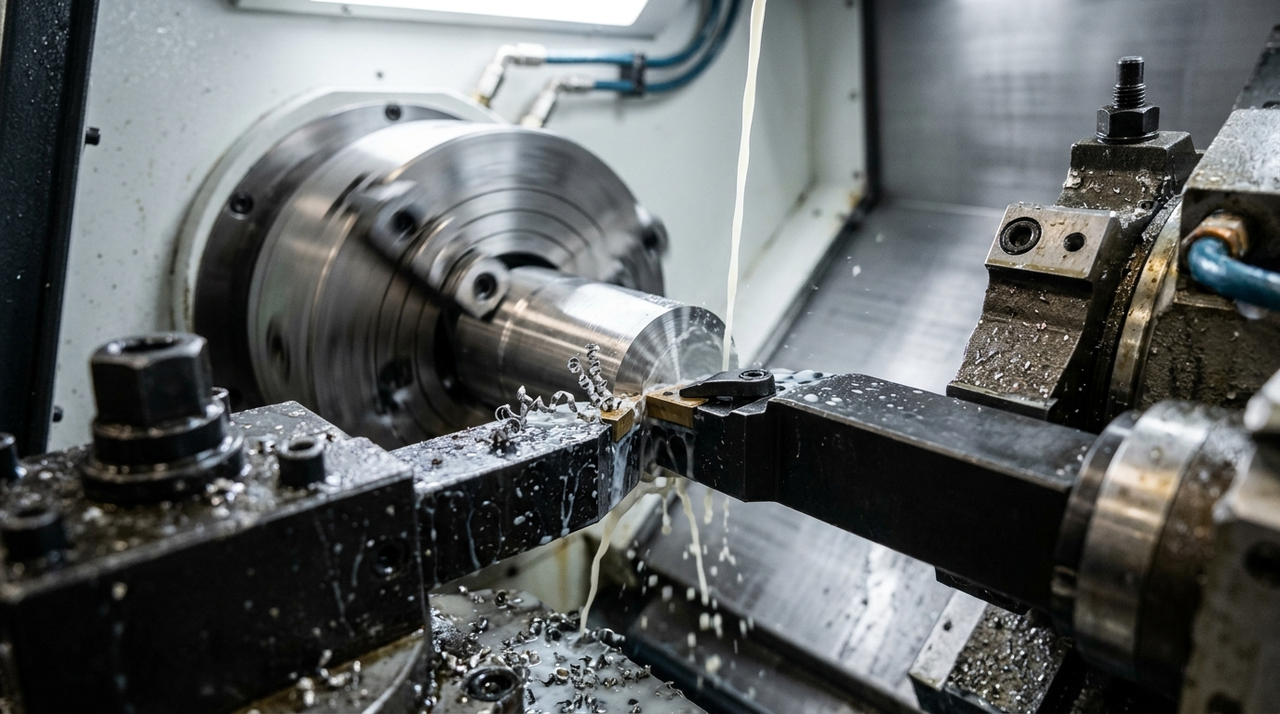
If a machined component will be welded into a larger assembly, evaluate the final welded condition rather than the incoming billet alone. Welding can expose portions of the material to temperatures that promote chromium carbide precipitation. The associated chromium depletion can increase susceptibility to intergranular corrosion under suitable service conditions. The lower carbon content of 316L reduces this sensitization risk, making it a common choice for welded, corrosion-sensitive assemblies.
303 is generally a poor welding candidate because its free-machining chemistry can contribute to cracking and compromised joint performance. 304 is weldable, but a welded design may warrant considering 304L, even though it sits outside this four-grade comparison. Material selection must also account for filler metal, welding procedure, section thickness, and the required post-weld condition. Neither 316L nor any other grade compensates for an unsuitable joining process or an uncontrolled weld procedure.
Plan the production sequence around weld distortion and surface restoration. Precision bores or sealing faces may need final machining after welding, followed by appropriate cleaning. Heat tint and affected surface layers may require removal to restore corrosion performance; passivation alone should not be assumed sufficient. Define clearly which dimensions apply before welding and which must be inspected on the completed assembly, so the drawing matches the real build order.
All four grades can be used for precision CNC parts, but material choice alone does not establish achievable tolerances. Thin walls can deflect under cutting and clamping loads, while uneven stock removal can release residual stress and distort the part after it leaves the fixture. A long sleeve with a tight bore may require roughing, unclamping to relieve stress, and staged finishing rather than a single uninterrupted machining sequence.
Specify tight tolerances on functional interfaces instead of applying them indiscriminately. Identify bearing seats, locating datums, sealing surfaces, and coaxial features clearly. For long components or close fits, dimensional inspection also needs a controlled temperature condition because thermal expansion can affect the measured result. Surface roughness should be specified separately from size and geometry; a dimensionally correct bore can still be unsuitable for a moving seal.
Mechanical service requirements deserve their own check. These austenitic grades are not hardened by conventional quench-and-temper treatment, although cold work can increase strength and hardness. Stainless-on-stainless sliding or threaded contact can also gall and seize. If the design involves wear, preload, or repeated assembly, review mating materials, lubrication, surface treatment, and load. Changing from 304 to 316 alone is unlikely to solve a galling problem, since both share similar galling tendencies.
A correct alloy can still corrode prematurely if machining or handling leaves embedded free iron, deposits, or unsuitable surface damage. Cleaning removes oils and residues; passivation treatments help remove free iron and support the stainless surface's passive condition. These operations are related but not interchangeable. Where required, specify a recognized treatment standard, such as ASTM A967/A967M, together with an appropriate acceptance test rather than writing only 'passivate' on the drawing.
Surface texture matters where fluids, contaminants, or biological residues must be removed. Deep tool marks, burrs, blind crevices, and inaccessible intersections can retain deposits even on 316L. For cleanable components, review geometry and finish together. Electropolishing can improve surface condition in suitable applications, but it removes material and can round edges and shift dimensions. Critical fits should therefore account for the finishing allowance before finishing is applied.
303 needs treatment procedures compatible with its sulfur-bearing inclusions; aggressive or poorly controlled chemistry can attack the surface around those inclusions. Discuss the grade with the finishing provider instead of applying a generic stainless process. For welded 316L, separately address scale and heat tint removal before specifying passivation. Document the required final appearance and technical acceptance criteria so cosmetic expectations do not quietly replace corrosion-related process requirements.
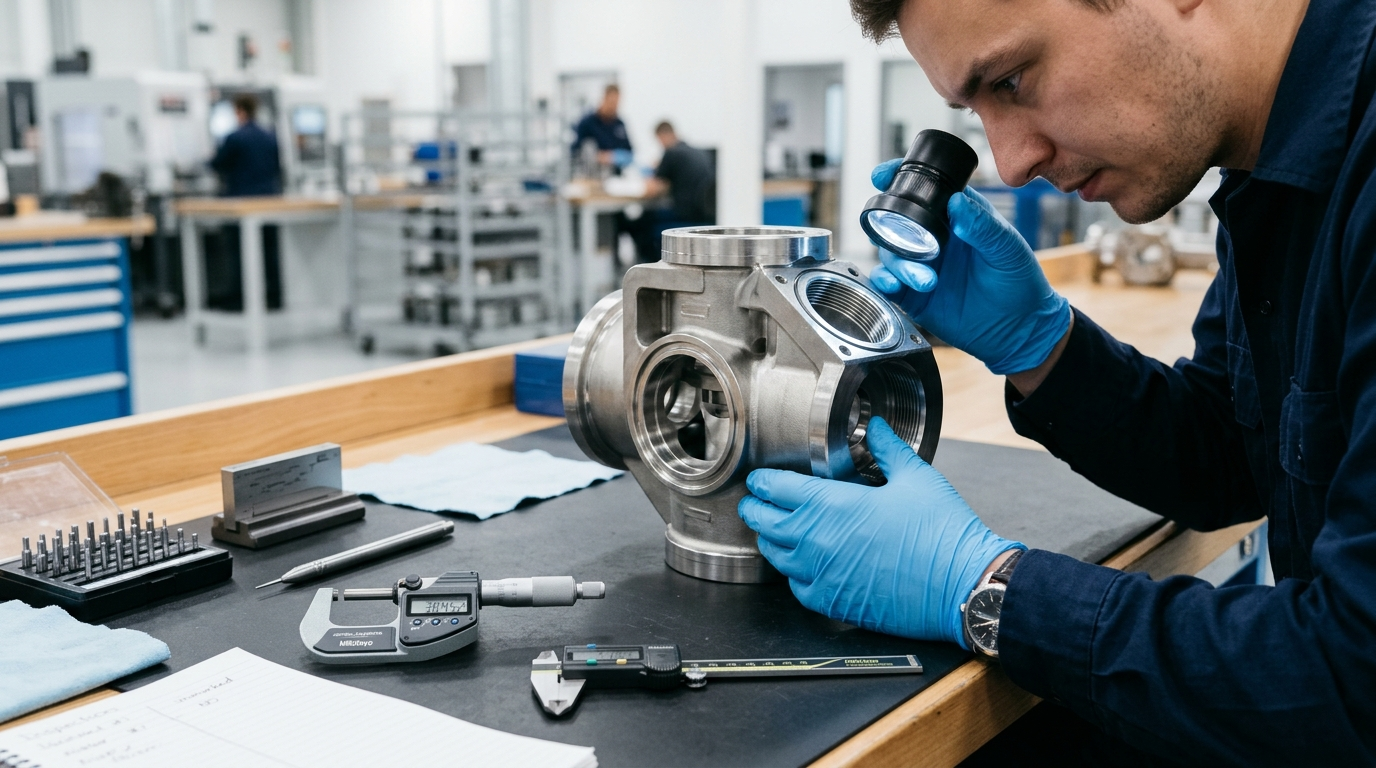
The relevant purchasing figure is the cost of an accepted finished component. It includes stock, setup, machining time, tool consumption, deburring, finishing, inspection, and any qualification work. A higher-priced free-machining bar can sometimes produce a less expensive finished part. Conversely, choosing 303 for a wet-service component can create downstream costs—testing, rework, or recalls—that overwhelm any initial machining advantage.
Prototype and production economics also differ. For a single part, programming, setup, and documentation may dominate the quotation. In repeated production, chip control, tool life, cycle time, and consistency become more influential. Ask suppliers to separate non-recurring work from recurring part cost where practical. Stock form and available machining allowance can also change the comparison, particularly for large components with substantial material removal.
When evaluating a grade swap, submit the same drawing, quantity, finish, and inspection requirements for every alternative-grade quote. Otherwise, apparent savings may reflect a narrower scope rather than a genuine material or process advantage. Huaruida's in-house CNC capabilities and 100% pre-packaging inspection let you benchmark finished-part cost against verified acceptance criteria rather than an unverified bar price.
Give the machining supplier a controlled drawing and model, the exact grade, applicable material standard, stock condition, and a service-environment summary. State whether welding, passivation, electropolishing, or other downstream processing is planned. Include quantities, critical dimensions, roughness requirements, inspection scope, and documentation needs. For international sourcing, identify the acceptable designation and standard explicitly; do not assume similarly named regional grades are interchangeable without checking composition and properties.
Specify material certificates and lot traceability when the application requires them. Handheld X-ray fluorescence can help distinguish molybdenum-bearing 316-family material from 304, but it does not verify the low carbon content defining 316L. That distinction requires suitable documentation or a carbon-capable analytical method. Dual-certified 316/316L stock may satisfy both requirements, but acceptance must follow the governing specification and certificate rather than a supplier's informal description.
Before release, confirm four decisions: the environment supports the grade, the machining plan supports the geometry, downstream processes preserve required properties, and inspection can verify acceptance. For regulated medical or aerospace work, the grade designation alone does not establish application compliance. Ask Huaruida Precision Machinery to review manufacturability against these requirements before freezing the design, while keeping final material approval within your engineering and quality process.
Generally, yes. Its free-machining chemistry improves chip breaking and often reduces machining effort and tool load. However, 303 has reduced corrosion resistance and is generally a poor choice for welded parts, so it is not a universal substitute for 304.
For comparable unwelded conditions, their chloride corrosion resistance is generally similar. Choose according to the applicable material standard, required mechanical properties, future thermal processing, and customer specification. 316L is especially useful when welding-related sensitization is a concern.
Not automatically. Seawater can cause pitting and crevice corrosion in 316, especially in stagnant, warm, or deposit-covered conditions. Assess the actual environment and consider higher-alloy alternatives when corrosion data does not support 316.
No. These grades are generally weakly magnetic or nonmagnetic in the annealed condition, but cold working can change their response. A magnet cannot reliably distinguish them; use traceable material documentation and appropriate testing.
Not every application explicitly requires it. The decision depends on contamination risk, service conditions, the drawing, and the governing specification. Where required, define the treatment and acceptance criteria rather than relying on an unspecified cleaning step.
XRF can identify alloying elements such as molybdenum, but it cannot establish the low carbon content that distinguishes 316L from 316. Use a material certificate tied to the stock or a suitable carbon-capable test method.
Products

45# Steel

45# Steel

45# Steel

Aluminum Tube

Aluminum Alloy

45# Steel

Aluminum Alloy

304 Stainless Steel
Navigation
Navigation
Contact Us
Tel: +86 13417419143
E-mail: [email protected]
Add:
2nd Floor, Building 7, 156 High Tech Industrial Park, Fuyuan 1st Road, Zhancheng Community, Fuhai Street, Baoan District, Shenzhen City, China.